Engineered for high-volume fitness clubs, institutional athletics, and commercial facilities across Canada.
The Canadian commercial fitness landscape—spanning commercial gym chains in Ontario, boutique strength studios in British Columbia, municipal recreation hubs in Alberta, and collegiate athletic centers across Quebec—demands high-yield, structural gym machinery capable of enduring relentless multi-shift operation. As Canadian facility owners, equipment distributors, and commercial developers navigate changing economic landscapes, sourcing high-capacity strength equipment directly from tier-1 Chinese manufacturers has transitioned from an alternative sourcing strategy into a core operational necessity.
Navigating the global strength equipment market requires an acute understanding of structural integrity, engineering tolerances, biomechanical alignment, and international freight logistics. Modern commercial Smith machines manufactured by leading Chinese exporters are no longer simple budget alternatives; they are high-precision exercise systems built on robotic-welded 11-gauge steel frames, linear recirculating ball bearings, laser-cut pitch locking racks, and multi-stage electrostatic powder coating systems designed to withstand Canada's high-humidity and sub-zero logistics chains.
Key Market Insight for Canadian Buyers: Sourcing factory-direct from premier Chinese exporters eliminates multi-tiered distributor markups while securing custom frame colorways, laser-etched municipal logos, and tailored CAD layout integration designed specifically for Canadian architectural footprints and building code compliance.
A commercial-grade Smith machine functions as the foundation of any serious strength training zone. Unlike consumer-grade light strength units, commercial units engineered for export to North America must adhere to stringent biomechanical standards and physical load limits.
The fundamental benchmark of commercial strength equipment lies in its steel composition. Superior Chinese exporters utilize heavy-duty Q235 structural steel tube frames, measuring 50mm x 100mm or 75mm x 75mm with a wall thickness of 3.0mm (11-gauge steel). This heavy frame construction prevents frame deflection, structural twisting, and weld fatigue under load capacities exceeding 1,500 lbs (680 kg).
Smooth barbell travel is essential for user joint health and exercise precision. Leading manufacturers incorporate industrial-grade recirculating linear ball bearings riding on solid, case-hardened, and hard-chrome plated steel guide rods (25mm to 30mm diameter). This reduces dynamic friction to near zero, providing a fluid vertical motion that mimics free-weight movement while maintaining fixed plane safety.
Biomechanical intent dictates machine geometry. Modern anatomical research confirms that natural human movement during pressing (bench press, overhead press) and squatting follows a subtle angular arc rather than a strict 90-degree vertical path. Leading Chinese exporters offer both 0-degree straight vertical systems for traditional weightlifting routines and ergonomically angled 7-degree pitch machines that align with natural shoulder and knee kinematics, significantly reducing joint shear forces during heavy loads.
To cater to beginner lifters, physical therapy settings, and specialized rehabilitation facilities, advanced Smith machines feature internal counter-balanced cable pulley systems. Housed within the vertical steel columns, counterweights offset the baseline weight of the Olympic barbell from 45 lbs (20 kg) down to a manageable starting resistance of 5 lbs (2.2 kg), ensuring versatility across diverse user demographics.
Why leading Canadian gym chains and institutional buyers partner directly with top-tier Chinese manufacturing facilities.
Complete customization from frame tube dimensions, laser-cut branding, plate stack sizing, to custom vinyl upholstery stitching tailored to your brand identity.
Robotic welding precision combined with 100,000-cycle load endurance testing guarantees long-term durability in high-volume, 24/7 commercial facilities.
Direct containerized shipping routes (FCL/LCL) connecting Ningbo/Qingdao ports to Port of Vancouver, Prince Rupert, Montreal, and Toronto rail yards.
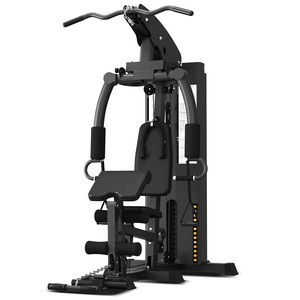
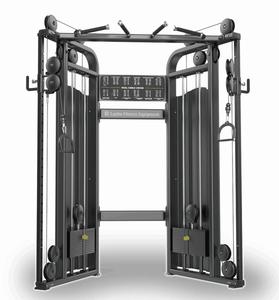
Real estate footprints in metropolitan cores like Toronto, Vancouver, and Montreal command premium price per square foot. Multi-family residential developers increasingly specify All-in-One Multi-Functional Smith Machines that integrate Smith pressing, dual-adjustable functional trainer cable crossovers, lat pulldown stations, and half-rack squat pegs into a single 25-square-foot footprint. This maximizes training variety while maintaining essential floor space and clear safety walkways.
University weight rooms (such as those in Calgary, Edmonton, and Hamilton) require high safety thresholds and heavy-load capacities. Industrial Smith machines featuring solid steel lockout hooks laser-cut at 50mm increments, spring-loaded safety catch stop blocks, and dual weight-plate storage horns ensure athletes can train to maximum muscle failure without requiring a dedicated human spotter.
For high-throughput 24/7 commercial clubs where equipment operates continuously, maintenance downtime directly impacts member retention. Machine designs with sealed bearing housings, self-lubricating guide rods, and heavy-duty thermosetting polyurethane (PU) coated cables (rated to 2,200 lbs tensile strength) ensure hassle-free operation and low maintenance overhead.
To assist procurement managers and equipment buyers in evaluating commercial Smith machine lines, the following comparative engineering matrix outlines technical specifications across standard commercial tiers:
| Specification Parameter | Light Commercial / Studio | Full Commercial Heavy-Duty | Institutional Premium All-In-One |
|---|---|---|---|
| Steel Frame Tube | 50 x 70 mm x 2.0 mm | 50 x 100 mm x 3.0 mm (11-Gauge) | 75 x 75 mm / 50 x 100 mm x 3.0 mm |
| Guide Rod Metallurgy | 20mm Solid Carbon Steel | 25mm Hard Chrome Plated Steel | 30mm Induction Hardened Alloy Rods |
| Linear Mechanism | High-Density Nylon Bushings | Industrial Recirculating Ball Bearings | Precision Sealed Linear Ball Bearings |
| Maximum Load Capacity | 750 lbs (340 kg) | 1,200 lbs (544 kg) | 1,800 lbs (816 kg) |
| Cable Tensile Rating | 1,500 lbs Steel Cable | 2,200 lbs Aircraft-Grade Cable | 2,500 lbs PU Coated Steel Wire |
| Frame Coating Finish | Single Coat Powder Spray | Dual-Coat Electrostatic Powder Coating | Sandblasted Zinc Primer + Dual Powder |
| Safety Catch System | Manual Stop Pegs | Spring-Loaded Auto-Lock Catches | Multi-Angle Laser-Cut Safety Hooks |
Importing commercial fitness machinery from China into Canada involves key regulatory, customs, and logistical steps. A clear understanding of these compliance guidelines ensures efficient clearance and delivery:
Fitness equipment imported into Canada falls under HS Code 9506.91.00.00 (Articles and equipment for general physical exercise, gymnastics, or athletics). Importers should verify current CBSA (Canada Border Services Agency) tariff schedules, Most-Favoured-Nation (MFN) tariff rates, and GST/PST/HST tax structures based on the destination province (e.g., 13% HST in Ontario, 5% GST + 9.975% QST in Quebec, 5% GST in Alberta).
Canadian winter logistics often subject ocean containers to extreme temperature swings and high ambient humidity during transpacific passage and rail transit across the Rocky Mountains. Superior Chinese suppliers utilize multi-stage zinc-rich anti-corrosion primer undercoats and electrostatic powder baking at 200°C. This dual-coat process prevents metal oxidation, paint flaking, and surface rust caused by salt exposure and indoor moisture tracking.
Ocean shipments from Chinese ports (Qingdao, Shanghai, Ningbo, Shenzhen) typically dock at the Port of Vancouver or Port of Prince Rupert. From there, intermodal rail services (CN Rail or CPKC) transport full container loads (FCL) directly to inland container depots in Calgary, Winnipeg, Toronto, and Montreal for final door-to-door flatbed truck delivery.
Direct technical and logistical answers for facility owners, procurement managers, and commercial gym developers.
Yes. Top-tier Chinese manufacturers engineer strength machinery in strict compliance with international safety standards, including ISO 20957-1/4 and ASTM F2276 structural specifications for commercial fitness equipment. Frames feature mandatory secondary mechanical safety stops, laser-etched lockout hooks, and warning signage compliant with North American commercial insurance mandates.
Manufacturing lead time for customized commercial Smith machine orders generally spans 20 to 30 days. Ocean freight transit from main China ports to Port of Vancouver requires approximately 14 to 18 days. Intermodal rail transport and final door-to-door delivery to Eastern provinces (Ontario, Quebec) adds 7 to 10 days, resulting in a total door-to-door timeline of 45 to 60 days.
Reputable Chinese suppliers maintain dedicated spare parts kits with every commercial container export. Essential wear items—such as linear ball bearing cartridges, pulley wheels, high-tensile aircraft cables, rubber bumper stops, and upholstery pads—are backed by manufacturer warranties (typically 10 years on structural frames, 2 to 3 years on linear bearings, and 1 year on wear items) with express air-freight dispatch for urgent service needs.
Yes. Comprehensive OEM and ODM services are a major advantage of direct factory procurement. Buyers can specify exact RAL powder-coat color codes for steel tubing, select custom vinyl upholstery colors and contrast stitching, and integrate laser-cut or CNC-machined steel brand logo plates directly onto machine headers and weight stack shrouds.
11-gauge steel has a nominal thickness of 3.0mm, whereas 14-gauge steel is approximately 2.0mm thick. In commercial environments, 11-gauge steel provides over 50% greater resistance to bending, torsional twisting, and weld failure under heavy loads, ensuring the Smith machine remains stable and safe during high-volume daily use.
Counter-balanced Smith machines use an internal cable and weight pulley system to offset the starting weight of the Olympic barbell from 45 lbs (20 kg) down to 5–15 lbs. This allows beginners, elderly users, and rehabilitation patients to perform pressing and squatting movements safely, broadening the usability of your strength zone across all member demographics.
Contact our engineering and export team today to request comprehensive product catalogs, custom 3D CAD facility layouts, and competitive factory-direct quotes tailored to your project requirements.
Get Catalog