Heavy-duty selectorized and multi-functional cable stations engineered for high-traffic commercial gym clubs, athletic centers, and institutional facilities.
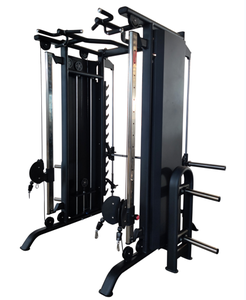
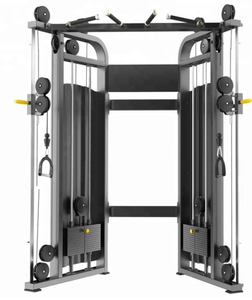
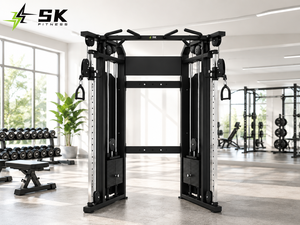
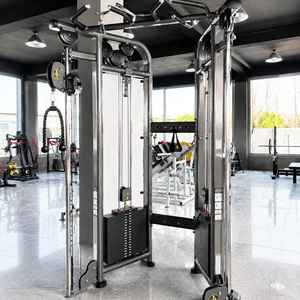
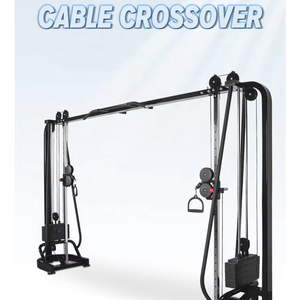
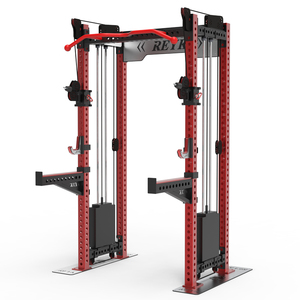
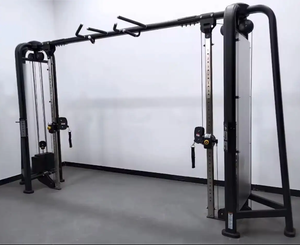
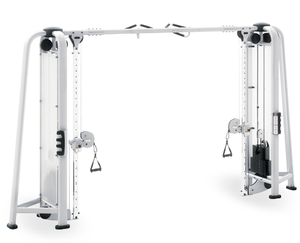
The global fitness equipment procurement landscape has undergone a seismic shift over the past decade. Facility owners, institutional buyers, military procurement officers, and international distributors are no longer merely seeking low-cost manufacturing; they demand biomechanical precision, structural longevity, and international safety compliance. Cable crossover machines and functional trainers represent the focal centerpiece of modern strength training facilities due to their unparalleled versatility, allowing users to train multi-planar functional movement patterns under smooth, constant tension.
China has established itself as the world's primary epicenter for high-precision fitness equipment fabrication. However, evaluating China cable crossover suppliers requires an empirical understanding of metallurgical standards, robotic welding automation, surface treatment technology, and cable-pulley mechanical advantage ratios. This technical whitepaper serves as an exhaustive procurement guide for commercial gym operators, institutional buyers, and fitness equipment distributors evaluating tier-1 Chinese manufacturers.
The structural integrity of a commercial cable crossover machine dictates both user safety and long-term operating expenditure (OPEX). Premier China gym equipment factories utilize heavy-grade structural steel tubing rather than commercial-light alternative metals often found in residential units.
Commercial strength equipment must withstand repetitive cyclic fatigue caused by dynamic cable tension and heavy weight stack impacts. Leading factories standardize on 3.0mm (11-gauge) to 3.5mm thick Q235 structural steel or high-tensile Q355 alloy steel. Frame geometries generally feature 50×100mm, 60×120mm, or 80×80mm oval or rectangular profiles. Laser-cut structural uprights ensure smooth slider adjustments without binding or play along the height axis.
The mechanical cable system is the most critical wear component on any cable crossover station. Top-tier Chinese OEM manufacturers employ internal 7×19 strand galvanized aircraft steel cables jacketed in self-lubricating, wear-resistant Nylon-12 or high-density Polyurethane (PU). The specifications are benchmarked as follows:
| Specification Parameter | Commercial Grade Standard | Light Commercial / Residential | Impact on Gym Operations |
|---|---|---|---|
| Cable Core Tensile Strength | 2,200 LBS to 4,000 LBS (1,000–1,800 kg) | 1,200 LBS (540 kg) | Prevents sudden cable snapping under peak dynamic loading. |
| Coating Material | Extruded Nylon 12 / Thermoplastic PU | Standard PVC (Vinyl) | Nylon 12 resists fraying 4x longer under continuous pulley friction. |
| Pulley Wheel Material | CNC Machined Aluminum Alloy / High-Impact Nylon | Recycled ABS Plastic | Aluminum pulleys minimize heat build-up and eliminate cable wear grooves. |
| Guide Rod Specifications | Hard-Chrome Plated Solid Stainless Steel (25mm) | Hollow Plated Tube (19mm) | Ensures friction-free weight stack movement and zero corrosion. |
| Frame Welding Technology | OTC 3D Robotic Pulse MIG Welding | Manual Spot Welding | Uniform bead penetration prevents frame stress fracturing over time. |
Understanding resistance ratios is fundamental when specifying cable crossover equipment for specific facility demographics. A cable crossover system operates on specific mechanical advantage principles configured by pulley routing:
When selecting a primary supplier from China, evaluating factory manufacturing capability is crucial for institutional buyers who require reliable Lead Times, Customization, and Quality Control compliance.
Precision German 3D fiber laser cutting equipment achieves 0.1mm tolerances on all adjustment holes, while robotic welding stations guarantee 100% structural weld consistency across production batches.
Frames undergo a 9-stage pre-treatment wash, zinc phosphate anti-rust dip, thermosetting electrostatic powder coating, and high-temperature curing to withstand sweat corrosion, humidity, and chipping.
Full customization including laser-etched brand logos, custom frame powder coat matching (RAL colors), premium upholstery stitching, custom weight stack increments, and custom instruction shrouds.
As commercial fitness centers evolve toward data-driven training and multi-functional space optimization, China’s leading manufacturers are integrating cutting-edge technologies directly into strength machinery platforms.
Modern commercial facility space costs require maximum functional footprint utilization. Future procurement favors modular 4-stack, 5-stack, 8-stack, and 12-stack cable crossover jungle systems. These configurations combine adjustable cable crossovers with integrated lat pulldown, seated cable row, and triceps extension stations, maximizing member throughput per square meter.
Tier-1 factories are beginning to pre-wire cable stack shroud housings for magnetic linear encoders and velocity-based training (VBT) sensors. This allows gym members to sync performance metrics (rep speed, power output, total volume) directly to cloud platforms via Bluetooth low energy (BLE) integrated modules.
In response to international ESG directives, top Chinese exporters are transitioning toward zero-VOC powder coatings, closed-loop water recycled pre-treatment systems, and 100% recyclable alloy weight stacks, lowering the carbon footprint of global gym buildouts.
To mitigate risk when establishing direct factory relationships with Chinese suppliers, procurement teams should execute a systematic evaluation protocol:
Planning a new commercial gym facility, institutional layout, or seeking factory-direct OEM cable crossover supply? Get instant technical specifications, CAD layout planning, and factory pricing.
Contact Us