American-Made Commercial Strength & Cardio Equipment  |  Serving Gyms, Schools, Military & Public Safety Worldwide

0%

Choosing commercial power racks is not simply a matter of comparing steel thickness and prices. A rack must fit your training style, available floor space, member volume, and maintenance routine. In a busy gym, small design choices matter. A narrow walk-in area can slow coaching. Poorly placed storage can create awkward movement. Weak adjustment systems may become frustrating after hundreds of daily uses.

Mark Rippetoe, a respected strength coach and author, said, “The power rack is the most important piece of equipment in the gym.” That principle still deserves attention. Commercial power racks should support squats, presses, rack pulls, and supervised training without feeling unstable. Look closely at the frame dimensions, upright spacing, hole pattern, safety arms, pull-up bar, and weight capacity. Check how quickly staff can adjust them between users. That detail often gets overlooked.

Safety comes first.

However, no specification sheet tells the whole story. A rack rated for heavy loads may still feel inconvenient if its safeties are difficult to position. Weld quality, finish durability, floor anchoring options, and replacement-part availability also influence long-term value. Ask suppliers for realistic product testing information, warranty terms, and references from comparable facilities. If possible, inspect a sample rack in person. Touch the adjustment pins. Move the safeties. Notice the noise.

The perfect choice may not exist. A practical decision usually balances strength, usability, space, and budget. This guide explains how to evaluate commercial power racks with a clearer, more experience-based approach.
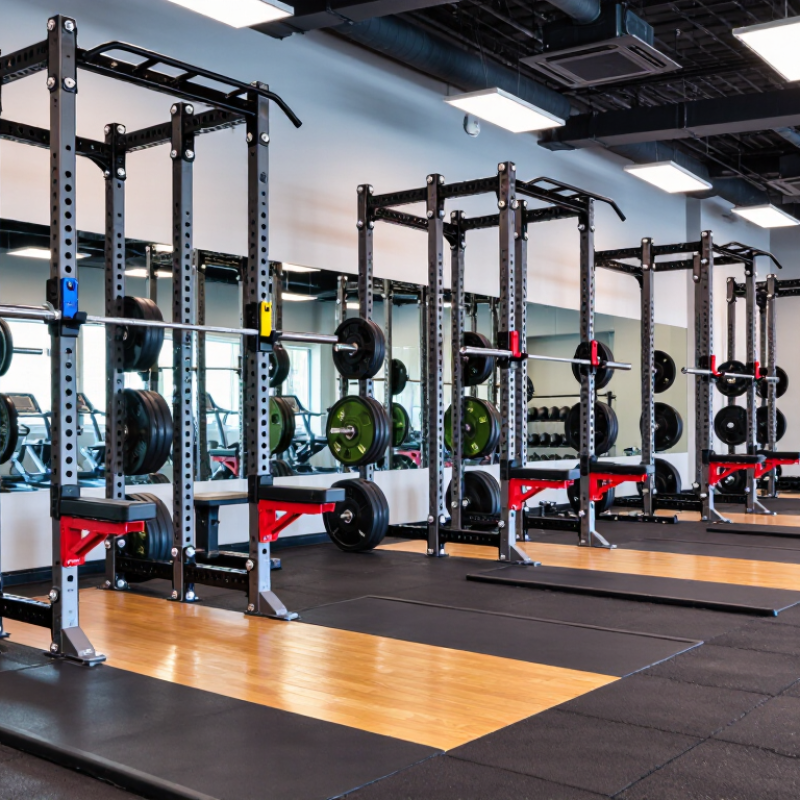
How to Choose Commercial Power Racks for Your Gym?

What a Commercial Power Rack Is and How It Supports Gym Training

A commercial power rack is a heavy-duty steel training frame built for repeated use in busy gyms. It usually includes upright posts, adjustable J-cups, safety bars, and pull-up handles. Many models also support cable attachments, weight storage, or plate-loaded accessories. The frame creates a controlled lifting area around the athlete. That structure matters when several members train throughout the day.

A rack supports squats, bench presses, overhead presses, rack pulls, and assisted bodyweight exercises. Safety bars can catch a failed squat when positioned correctly. J-cups hold the bar at a comfortable starting height. This reduces unnecessary strain during setup. In daily coaching, I check the hole spacing before each session. Small adjustments can change bar clearance and lifting confidence. It must fit.

Commercial use also demands stable anchoring, durable welds, and clear operating space. A wide base can improve stability, but it may reduce walking room. That trade-off deserves honest consideration. I have seen facilities choose a large rack, then struggle with crowded platforms. Measure ceiling height, floor area, and access routes before ordering. Check the rack’s rated capacity, finish quality, and adjustment range. Staff should inspect bolts, safeties, and J-cups regularly. Even strong equipment needs maintenance. A power rack supports training best when its design matches the gym’s users, layout, and coaching standards.

How to Assess Rack Construction, Safety, and Weight Capacity

Commercial power racks endure repeated drops, torsion, and rushed adjustments. Start with the steel frame, not the paint. Inspect upright thickness, weld consistency, hole alignment, and base stability. A rack that rocks on rubber flooring needs attention before loading. In 2023, United States fitness facilities served 72.9 million members, according to the 2024 Global Wellness Institute Fitness Industry Report. That usage level makes durability a daily requirement, not a sales feature.

Assess safety through real contact points. J-cups should seat fully, while safety arms must lock without excessive play. Test each adjustment with an empty bar. Then apply a controlled load and check movement. ISO 20957-1 and applicable ASTM fitness-equipment guidance provide useful reference points for stability, labeling, and testing. They do not replace an on-site inspection. BLS reported 2.6 million nonfatal workplace injuries and illnesses among U.S. private-industry workers in 2023. That figure is not gym-specific, but it reinforces the cost of weak maintenance habits.

Capacity labels need careful reading. Separate maximum user weight, bar load, attachment load, and dynamic load ratings. A 1,000-pound rack rating may not cover pull-ups, band tension, or uneven bar catches. Confirm whether the rating assumes floor anchoring. I would also inspect bolts every month and record torque checks. This sounds excessive. It is cheaper than discovering looseness during a failed lift. Never judge capacity by appearance alone; even thick uprights can hide poor welds or inadequate anchors.

Which Power Rack Features Improve Commercial Gym Functionality

How to Choose Commercial Power Racks for Your Gym?

A commercial power rack must support more than heavy lifting. It should manage constant use, varied training styles, and limited floor space. A high load rating matters, but stability matters more during repeated daily sessions. Look for thick steel uprights, secure safety pins, and reliable spotter arms. These parts should adjust smoothly without excessive movement. Small gaps can become frustrating when members change positions quickly.

Modular design improves commercial gym functionality. A rack with pull-up bars, plate storage, band pegs, and cable attachments can serve several training needs. Adjustable J-cups allow different users to set comfortable bar heights. Integrated storage keeps plates off walkways and reduces trip hazards. Leave enough clearance around the frame. A crowded rack may offer many features but still slow down training.

Maintenance should influence the purchase. Powder-coated surfaces resist wear, yet they can still chip near busy bar paths. Check welds, bolts, adjustment holes, and floor anchors during routine inspections. Easy-to-replace hardware reduces downtime. In practice, not every popular feature earns its space. A cable system may be useful, but it can increase maintenance and reduce open training area. Test the rack with different users before installation. A tall athlete and a beginner may reveal problems that specifications miss. Stability, access, and repairability often matter more than impressive accessory lists.

How to Match Rack Dimensions and Layout to Your Facility

Choosing a commercial power rack starts with the room, not the catalog.

Measure clear ceiling height, columns, doors, vents, and emergency routes first. A typical rack is 48–52 inches wide and 48–60 inches deep. A 90-inch rack may fit a 96-inch ceiling, but overhead pressing can still feel cramped. I prefer at least 12 inches above the highest moving bar path. That rule is practical, not universal. Local building and accessibility requirements still control the final layout. ASTM F2276 and ISO 20957 provide useful safety references for commercial fitness equipment.

Traffic matters more than a neat floor plan. The Health & Fitness Association’s 2024 U.S. Consumer Report recorded 72.9 million facility users aged six and older in 2023. Even a small gym may experience sharp evening peaks. Plan roughly 36 inches for basic circulation, then add space where benches, plates, or spotters move. Keep rack faces visible from the coaching area. Avoid placing a rack beside a low ceiling, glass wall, or busy entrance.

Test the layout with tape on the floor. Mark the rack, bench swing, plate storage, and walking paths. I would leave 48 inches between heavily used stations when possible. My first sketch is rarely correct. A rack can fit technically and still feel unsafe. Check loaded-bar movement, cleaning access, and member sightlines before ordering. Rack depth alone does not describe the real footprint.

How to Choose Commercial Power Racks for Your Gym? - How to Match Rack Dimensions and Layout to Your Facility
Facility Area or Decision Recommended Dimension or Data Range Layout Requirement Why It Matters Planning Check
Standard Commercial Power Rack Approx. 1.2–1.6 m wide × 1.4–1.8 m deep × 2.2–2.5 m high Place the rack on a level, non-slip surface with access to the front and rear lifting zones. This range fits many commercial training rooms while providing space for a barbell, safety bars, and adjustable J-hooks. Measure the finished floor area, ceiling height, lighting, ventilation, and any overhead obstructions before purchase.
Compact Rack Approx. 1.1–1.3 m wide × 1.1–1.5 m deep × 2.1–2.4 m high Use against a wall only when the design and manufacturer instructions allow wall placement and rear access is not required. A compact footprint helps smaller studios preserve circulation space, but it may limit storage and accessory options. Confirm that the rack still accommodates the intended barbell length and the user’s lifting position.
Walkout and Lifting Clearance Allow about 0.9–1.2 m of clear space in front of the rack Keep the walkout path free from benches, dumbbells, weight plates, and other traffic. Users need sufficient room to unrack a bar, step back safely, and complete squats or presses without obstruction. Measure from the front-most rack post, not from the wall behind the rack.
Side-to-Side Clearance Allow at least 0.6–0.9 m beside each active lifting station Avoid placing neighboring racks, columns, mirrors, or equipment where they restrict plate loading or movement. Side clearance improves access to weight plates, spotter positions, and adjustable rack components. Increase the clearance where the area also serves as a main walkway or group-training route.
Rear Clearance Allow about 0.6–1.0 m behind the rack when rear access is needed Keep enough room for users to move around the rack and for staff to inspect bolts, anchors, and accessories. Rear access is especially useful for multi-user facilities, cleaning, maintenance, and racks with rear storage or pulley components. Wall-mounting or placing the rack close to a wall may reduce this requirement, but follow the installation instructions.
Barbell Length Common Olympic barbell length: about 2.2 m Provide enough lateral space for the sleeves and plates to clear walls, columns, and adjacent equipment. The barbell can extend beyond the rack width, so the usable footprint is often wider than the frame itself. Check the barbell’s total length, sleeve length, plate diameter, and the rack’s recommended bar compatibility.
Ceiling Height Rack height plus at least 0.3–0.6 m of overhead clearance Keep the top of the rack away from sprinklers, ducts, beams, light fixtures, and suspended signage. Extra clearance simplifies installation and reduces the risk of contact with overhead building services. For overhead presses or pull-ups, assess the user’s reach and movement in addition to the rack height.
Floor Loading and Stability Use a level structural floor; verify the floor load and anchoring method on site Install on suitable rubber flooring or another approved surface and anchor the frame when required. A stable base reduces movement during lifts and helps protect the floor from repeated impact and concentrated loads. Consult a qualified building professional for upper floors, raised platforms, unusual substrates, or high-use areas.
Single Rack Layout Plan approximately 3.5–5.5 m² per active rack station, depending on clearance Position the rack so the front lifting zone does not overlap with a primary circulation path. A single-station layout supports independent use and makes supervision, cleaning, and equipment access easier. Mark the full rack footprint and all clearance zones on the floor with tape before final placement.
Multiple Rack Layout Use consistent spacing; keep about 1.2–1.8 m between facing rack fronts where users walk or lift Align racks in rows only when every station has unobstructed access and the aisle remains clear. Consistent spacing improves traffic flow, visibility for staff, and the ability to expand the training area later. Separate lifting zones from entrances, emergency routes, reception areas, and high-traffic cardio paths.
Integrated Storage Add approximately 0.3–0.6 m to the usable depth or side footprint for plate and bar storage Place storage where plates can be loaded without crossing the main walking lane. Integrated storage can improve organization, but it increases the actual operating footprint of the rack. Include the diameter of stored plates and the clearance needed for staff to remove them safely.
User Capacity and Traffic One active lifter per station; size the number of stations for peak demand Provide a separate queue, coaching, or warm-up area instead of allowing users to wait inside lifting zones. Separating active lifting from waiting areas reduces congestion and lowers the risk of accidental contact. Review peak-hour attendance, class schedules, supervision requirements, and emergency access before selecting the quantity.
Accessibility and Safe Routes Maintain clear routes and turning space according to applicable local accessibility regulations Do not block accessible paths, exits, fire equipment, electrical panels, or required service clearances. Compliance and clear circulation support safer use for all members and simplify inspections and maintenance. Confirm final dimensions with local building, fire, accessibility, and occupational-safety requirements.
Future Expansion Reserve approximately 10–20% of the planned strength-training area when possible Leave space for additional racks, benches, storage, and wider aisles instead of filling every available square meter. Reserved capacity allows the gym to respond to membership growth without completely redesigning the room. Map possible expansion zones while keeping current emergency routes and equipment clear.

How to Compare Costs, Maintenance, and Long-Term Value

How to Choose Commercial Power Racks for Your Gym?

A commercial power rack is a revenue asset, not merely a steel frame. The 2024 HFA Consumer Report recorded 72.9 million U.S. fitness-facility members in 2023. That volume increases daily wear on J-hooks, safeties, pulleys, and floor anchors. ACSM’s 2024 Worldwide Survey also ranked traditional strength training among leading fitness trends. Demand is strong. Maintenance cannot be an afterthought.

Compare total ownership cost, not only the invoice price. Include delivery, installation, anchoring, inspections, replacement parts, and staff labor. ISO 55000 asset-management guidance supports evaluating assets across their full life cycle. A cheaper rack may become expensive when a bent safety bar closes one training station. Ask for load ratings, steel thickness, weld-quality documentation, coating specifications, and replacement-part availability. Check whether bolts loosen after repeated use.

Track maintenance monthly. Wipe chalk and sweat from contact points, inspect welds, and test safeties under controlled conditions. Keep a simple log with dates, faults, and downtime. Small details matter. A rack that serves six members per hour may create more value than a larger rack used poorly. Still, utilization forecasts are often optimistic. I would review booking data after three months and adjust the equipment plan. Long-term value depends on reliability, repairability, member flow, and usable training capacity—not impressive specifications alone.

FAQS

What should I inspect before buying a commercial power rack?

Inspect the steel frame, welds, holes, bolts, and base stability. The rack should not rock on rubber flooring. Paint can hide problems. Check the structure underneath.

How can I test the rack’s safety points?

Seat each J-cup fully and lock every safety arm. Test adjustments with an empty bar first. Then apply a controlled load. Watch for movement or excessive play.

Does a high weight rating guarantee safe use?

No. Separate user weight, bar load, attachment load, and dynamic load ratings. A 1,000-pound rating may exclude pull-ups or band tension. Uneven catches can also change the loading. The label needs careful reading.

Does the rack require floor anchoring?

Ask whether its capacity assumes anchored installation. Check the floor type and anchor points. An unanchored rack may shift during heavy catches. Appearance proves little.

What costs should I include when comparing racks?

Include delivery, installation, anchoring, inspections, repairs, and staff labor. A low purchase price may hide expensive downtime. One bent safety bar could close a training station. The invoice is only part of the cost.

How often should a gym inspect and maintain its rack?

Inspect contact points, welds, bolts, and safeties every month. Remove chalk and sweat from J-cups and safety arms. Record faults, torque checks, and downtime. Small neglect becomes expensive.

How can I judge long-term value?

Measure reliability, repairability, usable capacity, and member flow. A rack serving six members hourly may outperform a larger unused rack. Review booking data after three months. Forecasts are often too optimistic.

What documents should I request from a supplier?

Request load ratings, steel thickness, weld-quality records, coating details, and spare-part information. Ask how repeated use affects bolts and adjustment points. Missing documents deserve caution. I would not rely on photographs alone.

Conclusion

Choosing the right commercial power racks is essential for creating a safe, efficient, and versatile gym training environment. A commercial power rack provides a stable framework for exercises such as squats, presses, and pulls while supporting progressive strength training for users with different experience levels. When evaluating options, focus on strong construction, reliable safety arms, secure adjustment points, and a weight capacity that suits both current and future training demands.

Functionality also depends on practical features, including pull-up stations, storage solutions, cable attachments, and easy-to-adjust components. Before purchasing, measure your facility carefully and consider ceiling height, floor space, user traffic, and rack placement. Finally, compare the total cost rather than the initial price alone. Durable materials, simple maintenance, replaceable parts, and long service life can provide greater value over time, helping your gym operate safely and efficiently while reducing future expenses.


Evelyn

Evelyn

Evelyn is a professional marketing specialist with a strong understanding of the company’s products, services, and customer needs. She regularly contributes expert articles to the company website, sharing clear, practical insights that help readers understand product features, applications, and the......