Choosing the best commercial cable machines for 2026 takes more than comparing frame sizes or counting attachments. Global buyers must consider how a machine feels under load, how easily staff can adjust it, and whether its construction suits the daily rhythm of a busy gym. A trainer should be able to move the pulleys smoothly, change positions without fumbling, and guide a client through a controlled repetition. Small details matter.
As fitness-equipment consultant Maya Chen puts it, “A cable station earns its place when it moves smoothly, adjusts quickly, and stays dependable through daily use.” This practical standard helps buyers look beyond polished product photos. Check pulley travel, cable routing, weight-stack increments, adjustment points, and the space required for safe access. Ask suppliers for clear specifications, warranty terms, and service support in the intended market. Those details can be harder to judge than a machine’s finish.
This guide compares commercial cable machines for different facilities, from compact studios to high-traffic health clubs. It examines versatility, build quality, user experience, and purchasing considerations that affect ownership over time. No single model suits every floor plan or budget. And a bigger stack is not always better. Some product claims need closer checking, especially when specifications vary by configuration. Use the comparisons as a starting point, then confirm the details with the manufacturer before buying.
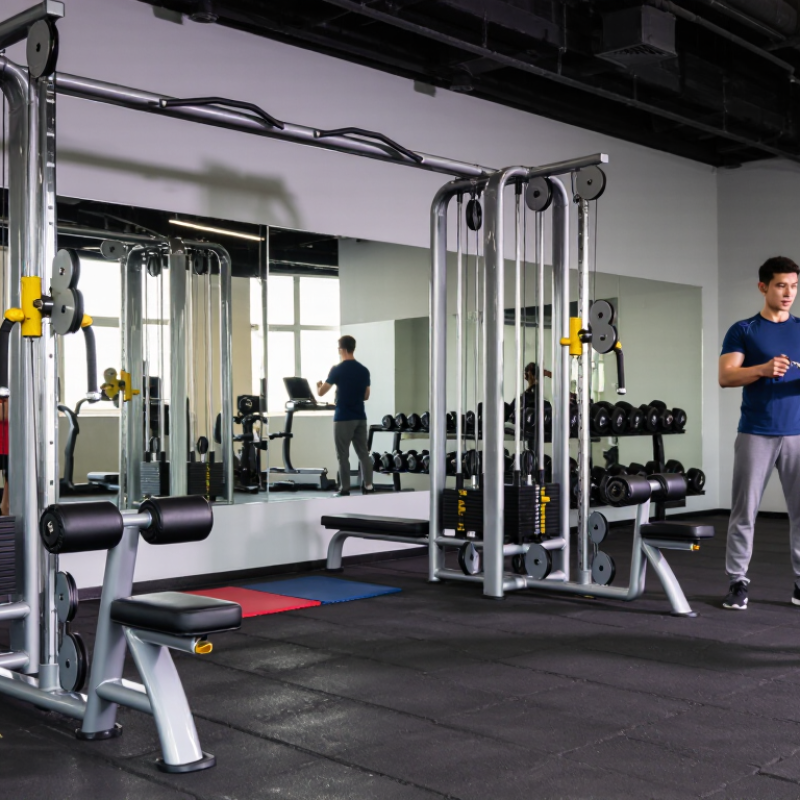
What Is a Commercial Cable Machine?
A commercial cable machine uses pulleys, adjustable cables, and a resistance source to create smooth tension during exercise. Many models use a weight stack, where a pin selects the load. Others use resistance plates or compact resistance systems. The frame supports the moving parts and helps keep the unit steady under repeated use. In a busy training room, that stability matters.
How It Works
When a user pulls a handle, the cable travels over one or more pulleys and lifts the selected resistance. The user controls the return, so muscles work through both parts of the movement. Adjustable pulley points change the cable’s angle and starting height. This allows exercises such as rows, presses, and rotational pulls from different positions. Dual cable columns can let two users train independently, though shared space and load limits still matter.
Simple mechanics.
Before choosing equipment, buyers should check the cable path, pulley movement, and adjustment locks in person when possible. A rough pull, frayed cable, or loose setting can affect comfort and safe operation. Maintenance needs are easy to underestimate. Regular inspection and cleaning help identify wear, but service schedules vary by design and use. The machine may look straightforward; its feel depends on careful setup.
Commercial cable machines generally fall into four types: single adjustable pulleys, dual adjustable pulley stations, cable crossover units, and selectorized multi-station systems. Single-pulley machines suit focused movements such as triceps press-downs, with the weight stack and pulley clearly visible. Dual adjustable systems allow users to change pulley height for rows, presses, and diagonal pulls. Cable crossovers use two opposing towers, making chest flyes and bilateral movements practical. Multi-station units combine several exercise positions, but need more floor space and careful traffic planning.
The ACSM 2024 Worldwide Fitness Trends survey ranked functional fitness ninth among global trends. That finding supports offering versatile equipment, though it does not measure cable-machine sales directly. For facility buyers, the distinction matters: adjustable pulley stations offer exercise variety, while multi-station units can serve more users in a compact layout. Check cable travel, adjustment markings, stack increments, and the feel of the handles. A pulley that sticks mid-repetition is a small defect with a very visible effect.
Tips: Measure the full training footprint, including user clearance around moving cables. Test adjustments with sweaty hands and inspect cable routing at several heights. A lower starting weight can help beginners, but it may feel limiting to stronger users. That trade-off deserves a real trial, not just a brochure review.
For global buyers, a commercial cable machine should suit both its users and its room. Compare the frame’s steel thickness, weld quality, and stated weight capacity. A stable base matters when someone pulls hard from a low pulley. Check the cable’s coating and pulley bearings, too. Smooth movement should feel consistent, not jerky.
Adjustability affects daily use. Look for clearly marked pulley positions, comfortable handles, and enough travel for common exercises. Measure ceiling height and floor space before ordering; two towers may need more clearance than product photos suggest. Ask the supplier for installation instructions, replacement-part availability, and warranty terms in writing. Shipping delays can make a small missing component frustrating.
Tips: Request a video showing the machine under load, then confirm dimensions, voltage needs for any electronic features, and available service support. If possible, test a similar unit in person. I would not judge durability by a polished finish alone. Honestly, buyers can still overlook details when comparing prices quickly. The cheaper option may fit the budget, but a loose pulley or awkward adjustment can affect every workout.
For global buyers, a polished finish is not proof of a reliable cable machine. Ask for the exact model’s test reports, material specifications, and traceable production records. The ISO Survey 2023 recorded more than 1.2 million valid ISO 9001 certificates worldwide. That scale shows quality systems are widely used, but a certificate alone does not verify a machine’s design or performance.
Check whether testing follows ISO 20957-1 for stationary training equipment and ISO 20957-2 for strength-training equipment. Confirm the report covers the configuration you plan to buy, including pulley routing, cable, attachments, and rated load. Request documented cycle testing and inspection criteria. A cable that moves smoothly in a showroom may behave differently after repeated use. Ask how the supplier tests wear, alignment, and cable fraying.
Compliance depends on the destination market and the product’s intended use. Have the supplier identify applicable requirements in writing, then verify the paperwork with a qualified local testing or compliance professional. Check labels, warnings, instructions, and electrical components, if included. Inspect a production sample, not only a presentation unit. Small details matter: a rough pulley edge, loose fastener, or unclear load marking can signal weak controls. I would still question any unusually broad durability claim without test conditions.
For global buyers, a commercial cable machine is only as dependable as its supply chain. Request a packing list with unit dimensions, gross weight, and crate details before comparing freight quotes. Check whether pulleys, cables, and weight-stack guides are secured for transit. Small parts can disappear in a large crate.
The World Bank’s Logistics Performance Index 2023 compares countries on customs, infrastructure, and shipment timeliness; use those measures to assess routes, not just quoted freight prices. Ask suppliers to confirm lead times in writing, including production, port handling, and delivery to your facility.
Shipping schedules can shift. UNCTAD’s Review of Maritime Transport 2024 reported that maritime trade volume grew 2.4% in 2023, while longer routes increased ton-miles by 4.2%. These figures show why a low equipment price may not predict the landed cost.
Request a written estimate covering insurance, port charges, customs documentation, and final-mile delivery. Also confirm who handles damage claims and what photographs or inspection records are required. I would still allow extra time; estimates are not promises.
After-sales support deserves the same scrutiny as the frame and cable rating. Ask for a parts list, exploded assembly drawings, and maintenance intervals before purchase. Confirm which wear parts are stocked locally and how technical help is delivered across time zones.
A clear warranty should explain labor, replacement shipping, and exclusions. Get it in plain writing.
A vague promise of “lifetime support” sounds reassuring, but it is hard to evaluate without response times, spare-part availability, and a named service process.
Request test reports for the exact model, material specifications, and traceable production records. A polished finish or quality certificate alone cannot prove performance.
Ask whether testing follows ISO 20957-1 and ISO 20957-2, as applicable. Confirm the report covers the planned cable routing, attachments, and rated load.
Request cycle-test results and inspection criteria for wear, alignment, and cable fraying. Smooth movement in a showroom is not enough.
Ask for applicable requirements in writing and verify documents with a qualified local professional. Review labels, warnings, instructions, and any electrical components.
Look closely at pulley edges, fasteners, and load markings. Small defects can reveal weak quality controls.
Ask for unit dimensions, gross weight, crate details, and a packing list. Confirm that pulleys, cables, and weight-stack guides are secured.
Request a written estimate covering insurance, port charges, customs documents, and final-mile delivery. Freight quotes alone may miss important costs.
Request a parts list, assembly drawings, maintenance intervals, and written warranty terms. Clarify labor, replacement shipping, exclusions, response times, and spare-part availability.
No. Ask for written timelines covering production, port handling, and facility delivery, then allow extra time. Estimates can shift.
This guide explores what commercial cable machines are, how their adjustable pulley systems support a wide range of strength-training movements, and which main configurations suit different facilities and users. It explains how to compare key features in 2026, including frame construction, cable smoothness, weight-stack options, adjustment range, safety details, footprint, and maintenance needs. Rather than focusing on a single design, the overview helps buyers match equipment capabilities to training goals, available space, and expected usage.
For global buyers, the guide also outlines practical ways to assess build quality, request clear product specifications, and confirm that equipment documentation meets the requirements of the intended market. It covers sourcing and shipping considerations such as packaging, lead times, freight planning, installation, spare parts, and communication with suppliers. Attention to after-sales support can help buyers plan for routine upkeep and address service needs over the equipment’s working life.