American-Made Commercial Strength & Cardio Equipment  |  Serving Gyms, Schools, Military & Public Safety Worldwide

0%

Why Are Adjustable Weight Benches Worth Buying? The answer begins with flexibility, not flashy features. Adjustable weight benches let one platform support flat presses, incline dumbbell work, seated shoulder presses, and supported rows. A simple backrest adjustment can change your training angle within seconds. That matters when space, budget, or workout time is limited.

From practical home-gym experience, a stable bench can make dumbbell training feel more organized. I have noticed the difference between a narrow, poorly padded bench and one with firm upholstery. On the better model, my feet stay planted, my shoulders remain supported, and I spend less time correcting my position. Small details matter. The adjustment ladder should lock securely. The seat should reduce sliding during incline presses. The frame should feel steady when heavy dumbbells leave the floor.

Still, adjustable weight benches are not automatically worth buying. Some models advertise impressive weight capacities but wobble under ordinary movements. Others use thick padding that feels comfortable initially but restricts shoulder movement. Specifications require careful reading. Check the combined user-and-weight capacity, adjustment range, frame construction, warranty, and storage footprint. A reliable bench should suit your body, exercises, and available room.

It is not a miracle machine.

For beginners, a mid-range bench may provide enough function without unnecessary attachments. Experienced lifters may need stronger hinges, finer angle changes, and better long-term durability. The right purchase depends on realistic use, not marketing language. That honest assessment makes adjustable weight benches valuable: they can expand training options while keeping a home setup practical, provided stability and fit come first.
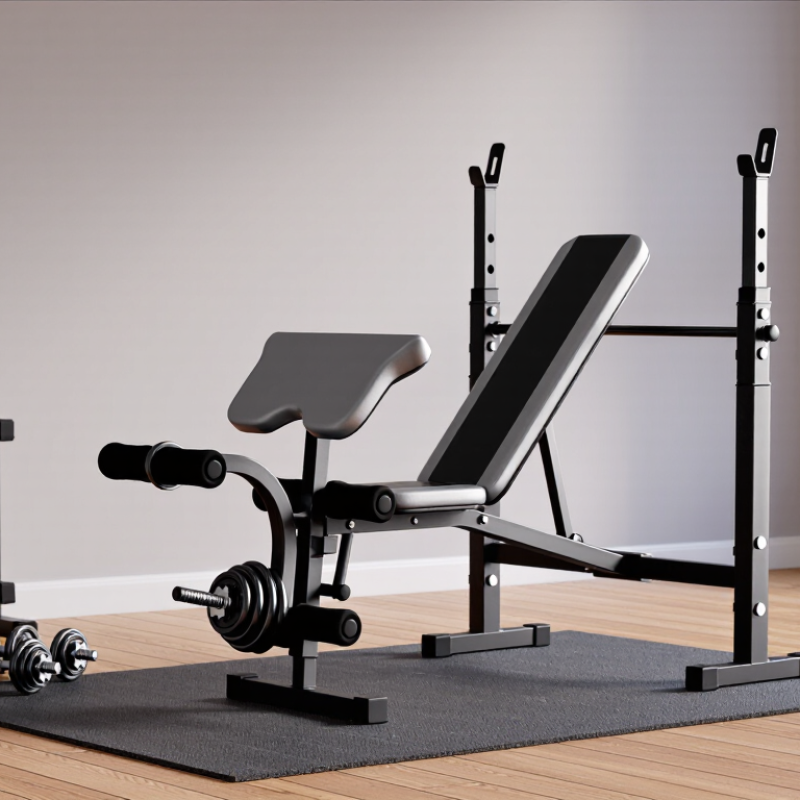
Why Are Adjustable Weight Benches Worth Buying?

What Is an Adjustable Weight Bench?

An adjustable weight bench is a padded platform designed for resistance training. Its backrest and seat change angles through a locking mechanism. Common positions include flat, incline, and sometimes decline. This adjustment supports presses, rows, shoulder exercises, split squats, and core movements. A flat bench offers one position. An adjustable bench offers several training angles in a smaller home space.

The 2020 World Health Organization guidelines recommend muscle-strengthening activities on two or more days each week. The 2024 ACSM Worldwide Survey collected responses from more than 2,000 fitness professionals and continued to recognize strength training as a major exercise practice. A suitable bench can make those sessions more varied. It can also improve body positioning during pressing movements. That matters when your shoulders feel unstable or your elbows drift backward.

Look closely at the frame, adjustment pins, feet, and stated weight capacity. A bench that wobbles under a slow dumbbell press is not a useful bargain. The back pad should support your shoulders without forcing your neck forward. Check the gap between the seat and backrest, too. Large gaps may feel uncomfortable during flat exercises. I would not assume a higher price guarantees better stability. Some inexpensive benches work well, while some polished designs feel surprisingly weak. Test the adjustment lever and place both feet firmly on the floor before lifting. Small details become obvious under load.

Why Are Adjustable Weight Benches Worth Buying?

What Is an Adjustable Weight Bench?

An adjustable weight bench is a strength-training bench with a backrest that can be positioned at different angles. The representative settings below show how one bench can support flat, incline, and upright training positions.

The displayed angles represent common training positions: 0° for flat exercises, 30°–45° for incline pressing, 60° for higher-incline movements, and 85°–90° for upright exercises. Exact adjustment positions vary by bench design.

How Adjustable Positions Support Different Exercises

An adjustable weight bench earns its place by changing how your body meets the exercise. Its value comes from positioning, not appearance. A flat setting supports traditional bench presses, dumbbell presses, chest-supported rows, and floor-based core work. It keeps the torso stable while your arms move through a controlled path.

Raising the backrest shifts emphasis toward the upper chest during incline presses. A moderate angle often feels more natural than a steep one. Near-upright positions support seated shoulder presses, lateral raises, and curls with better balance. The seat angle also helps prevent sliding, especially when pressing heavier dumbbells. For supported rows, setting the backrest slightly inclined can keep your chest in contact with the pad. Your lower back does less unnecessary work.

Some benches offer a decline position for decline presses, sit-ups, or specific abdominal exercises. This angle is useful, but it is not essential for every lifter. I sometimes choose a simpler flat setup because adjusting equipment can interrupt my focus. That is a real limitation. More positions do not automatically create better training.

Check that each adjustment locks firmly before lifting. The pad should support your shoulder blades without forcing your neck forward. Leave enough room for your feet to press into the floor. During split squats or hip thrusts, a stable bench matters as much as its padding. A small wobble can change your balance, even with light weights.

Why Adjustable Benches Improve Workout Versatility

An adjustable weight bench changes one small space into several training stations. Flat pressing builds a stable starting point. A moderate incline shifts more work toward the upper chest and front shoulders. A steep incline supports seated presses, while the upright position helps with controlled dumbbell curls or shoulder raises. This angle change matters because exercise selection affects movement patterns, muscle emphasis, and joint comfort. WHO guidelines recommend muscle-strengthening activities on at least two days weekly, alongside 150–300 minutes of moderate aerobic activity. An adjustable bench helps users organize both strength and accessory sessions more efficiently.

The American College of Sports Medicine’s 2025 Worldwide Survey ranked traditional strength training among the five leading fitness trends. That finding reflects growing demand for practical resistance training, not just crowded gym routines. In my experience, a bench also improves progression: a beginner can use a low incline, then gradually increase the angle or load. Small changes are easier to track. Still, an adjustable bench is not automatically better. Poor back support, unstable hinges, or excessive incline can reduce control and irritate the shoulders. I have made that mistake myself. A bench should lock firmly, support the lower back, and match the user’s height and dumbbell range. Even then, some movements feel better on the floor. That limitation is worth remembering.

Key Benefits for Strength, Space, and Training Progress

An adjustable weight bench earns its space by changing one training station into several positions. Flat pressing feels stable and direct. A slight incline shifts more work toward the upper chest and front shoulders. Higher angles support seated presses, rows, and controlled core exercises. That range matters when a room cannot hold multiple benches. In a small apartment, folding the bench beside a wall can clear the floor within minutes. Space saved is not a minor benefit. It makes regular training easier.

Strength gains depend on repeatable loading, sound technique, and recovery. An adjustable bench helps keep body position consistent as weights increase. Your feet stay planted, your back receives support, and each repetition becomes easier to compare. Use small angle changes to manage joint comfort or target muscles differently. A practical progression might begin with three sets of eight at a manageable load. Later, add a little weight or one repetition, not both every time. Keep records. They expose slow progress.

The equipment is useful, but it is not magic. I have seen lifters chase heavier dumbbells while losing shoulder control. That is a poor trade. Check the locking mechanism before each session, and avoid unstable surfaces. A bench with many settings can still feel awkward at certain angles. Test your setup with light weights first. Personal comfort matters, although it should not replace proper technique. A strong bench supports progress, but your patience does most of the work.

Why Are Adjustable Weight Benches Worth Buying? - Key Benefits for Strength, Space, and Training Progress

Evaluation Dimension Typical Adjustable Bench Data Practical Benefit Training Progress Impact What to Check Before Buying
Exercise versatility Flat, incline, and sometimes decline positions; commonly 4–8 back-pad angles. Supports presses, rows, shoulder exercises, split squats, step-ups, and core work. Allows more movement variations without purchasing several specialized benches. Confirm that the angle range includes a stable flat position and a useful upright angle.
Back-pad adjustment Typical settings range from 0° flat to approximately 70–85° upright, depending on design. Changes the emphasis of pressing and supported exercises. Provides a practical way to progress by varying exercise angle and muscle emphasis. Look for clearly defined locking positions and minimal movement between settings.
Seat adjustment Many adjustable models offer 2–4 seat positions, including a flat or slightly raised setting. Helps prevent the hips from sliding during incline pressing and improves positioning. More consistent positioning can improve technique and repeatable performance. Check whether the seat and back pad meet with a small, stable gap rather than a large opening.
Load capacity Home-use benches commonly list combined user-and-weight capacities of approximately 250–1,000 lb (113–454 kg). Determines how much external weight can be used safely within the manufacturer’s rating. A higher appropriate capacity leaves room for gradual strength gains. Do not compare only the maximum number; verify whether the rating includes body weight and lifting load.
Space efficiency Typical footprints are about 45–65 in long and 15–25 in wide (114–165 cm × 38–64 cm). Uses substantially less floor area than a full multi-station strength machine. More available space makes it easier to maintain a consistent home-training routine. Measure the workout area, including clearance for dumbbells, movement, and adjustment access.
Storage convenience Some models can be stored vertically or folded; folded dimensions vary widely by construction. Allows the bench to be moved away when the training area has another use. Reducing setup and storage friction can support more frequent training. Check the folded height, transport wheels, locking system, and whether vertical storage is recommended.
Stability Wide feet, rubber contact points, a rigid frame, and multiple adjustment supports are common stability features. Reduces unwanted rocking during pressing and unilateral exercises. Greater stability helps maintain technique as resistance increases. Test the bench at flat and inclined angles; stability should not depend on one position only.
Seat and back-pad comfort Foam thickness commonly falls around 2–3 in (5–8 cm), with upholstery designed for repeated use. Provides support without excessive sinking or pressure on the shoulders and hips. Comfort can make longer sessions and higher training volume more manageable. Check pad firmness, surface grip, seams, and whether the pad remains supportive under load.
Adjustment speed Pin, ladder, or pop-pin systems typically allow angle changes in a few seconds. Makes supersets, drop sets, and exercise transitions easier to organize. Shorter transitions can improve workout efficiency without adding extra equipment. Prefer mechanisms that are easy to reach and visibly locked before loading the bench.
Training compatibility Suitable for dumbbells, resistance bands, bodyweight movements, and selected barbell exercises when paired with an appropriate rack. Works as a central platform for many home strength routines. Supports progressive overload through additional weight, repetitions, sets, or exercise variations. For barbell work, confirm rack compatibility and never exceed the bench or rack’s stated capacity.
Safety considerations Key features include secure adjustment locks, non-slip feet, a rigid frame, and a level base. Helps reduce avoidable movement or equipment-related interruptions during lifting. Consistent safety checks allow training progression with greater confidence. Inspect bolts, welds, adjustment points, upholstery, and feet regularly; follow the supplied instructions.
Overall value One adjustable bench can replace several basic bench positions Combines multiple angles and exercises in one relatively compact item. Offers a flexible base for gradually expanding a home strength program. Choose based on stability, capacity, adjustment range, and fit for the user—not appearance alone.
Figures are typical specifications or commonly observed design ranges for home-use adjustable weight benches; exact measurements, capacities, and adjustment systems vary by model.

What to Consider Before Buying an Adjustable Weight Bench

Why Are Adjustable Weight Benches Worth Buying?

Before buying an adjustable weight bench, check stability before comfort. A wide base should stay planted during pressing, rowing, and seated curls. Shake the frame lightly. Any noticeable movement deserves caution.

The 2024 ACSM Worldwide Survey ranked traditional strength training fifth among global fitness trends. That demand makes bench quality more important, not less.

The World Health Organization recommends muscle-strengthening activities on at least two days weekly. A reliable bench can support that routine, but only when its specifications match your training.

Check the backrest angles, seat adjustment, pad thickness, and maximum user weight. Flat, incline, and near-vertical positions cover most home exercises. However, too many adjustment points can create extra wear. Simpler may be safer.

The weight rating should include your body weight and lifted load, with a reasonable safety margin. A narrow pad may feel unstable under heavy dumbbells. A very soft pad can also reduce control. Small details matter.

Measure your training space before ordering. Leave enough room to carry weights and lower the backrest.

Look for locking pins or tested ladder mechanisms, not loose friction parts. ASTM fitness-equipment standards can provide useful safety benchmarks, although household products may not follow every standard.

I would not choose a bench by appearance alone. My own preference can be biased toward compact designs, yet compact frames sometimes sacrifice stability.

Check the return policy, inspection requirements, and published test information. Fitness equipment should earn trust through evidence.

FAQS

Why is an adjustable bench useful for home workouts?

One bench can create several training stations. Use it flat for presses. Raise it for seated presses, rows, curls, or shoulder raises. This saves floor space in smaller rooms.

Which bench angles are most useful?

A flat position supports stable pressing. A low incline emphasizes the upper chest and front shoulders. A steeper incline supports seated presses. Near-vertical settings help with controlled shoulder work and curls.

Can an adjustable bench help beginners progress?

Yes, if changes remain gradual. Start with a manageable load and three sets of eight repetitions. Later, add one repetition or a small amount of weight. Do not change everything at once. That mistake is easy to make.

How much space should I leave around the bench?

Leave room to carry dumbbells safely. You also need space to lower the backrest. A folding bench may fit beside a wall. Measure the room before buying. Compact is not always stable.

What safety features should an adjustable bench have?

Look for a wide, planted base and a firm locking system. The backrest should not shift during pressing. Check the hinges, pins, and adjustment ladder before every session. Test the setup with light weights. Shake the frame lightly.

How can I choose the correct weight capacity?

Include your body weight and the lifted load. Leave a reasonable safety margin. A narrow pad may feel unstable with heavy dumbbells. A very soft pad can reduce control. Published test information is useful.

Is a bench with more adjustment positions always better?

No. Extra settings may create more wear and complexity. Flat, incline, and near-vertical positions cover many home exercises. A simpler mechanism can feel more dependable. I sometimes prefer compact designs, but they may sacrifice stability.

Are all exercises better with an adjustable bench?

No. Some movements feel more comfortable on the floor. An excessive incline can irritate the shoulders. Good equipment cannot replace careful technique. Patience still drives progress.

Conclusion

An adjustable weight bench is a versatile piece of strength-training equipment with a backrest that can be positioned flat, inclined, or sometimes declined. These settings support a wide range of exercises, including presses, rows, shoulder movements, core exercises, and dumbbell training. By changing the bench angle, users can target muscles from different directions and adapt exercises to their fitness level, goals, and preferred training style.

Adjustable weight benches are worth considering because they can make home workouts more varied while using less space than several specialized benches. They also support gradual training progress by allowing users to increase exercise difficulty, improve positioning, and combine movements more effectively. Before buying, consider the bench’s weight capacity, stability, adjustment range, padding, size, storage needs, and ease of use. A suitable bench should feel secure during movement, provide comfortable support, and fit both the available workout area and the user’s long-term training plans.


Evelyn

Evelyn

Evelyn is a professional marketing specialist with a strong understanding of the company’s products, services, and customer needs. She regularly contributes expert articles to the company website, sharing clear, practical insights that help readers understand product features, applications, and the......